Hanukkah, also known as the “Festival of Lights,” is a Jewish festival celebrated over eight days. It commemorates events that occurred more than two thousand years ago, in the second century BCE. During this time, a group of Jewish fighters called the Maccabees rebelled against the Seleucid Greek rulers, who had taken control of Judea and suppressed Jewish religious practices. After the Maccabees successfully reclaimed Jerusalem and the Temple, they aimed to rededicate the sanctuary using ritual oil. Tradition states that they found only a small amount of consecrated oil, enough to keep the Temple menorah (candelabrum) lit for just one day. Miraculously, this oil lasted for eight days, which allowed time to prepare more ritually pure oil. The holiday of Hanukkah celebrates this miracle of light, the freedom of worship, and spiritual resilience.
The word Hanukkah itself means “dedication,” referring to the rededication of the Second Temple in Jerusalem after the Maccabean victory.
Hanukkah is observed with several lasting customs that highlight its themes of light and perseverance.
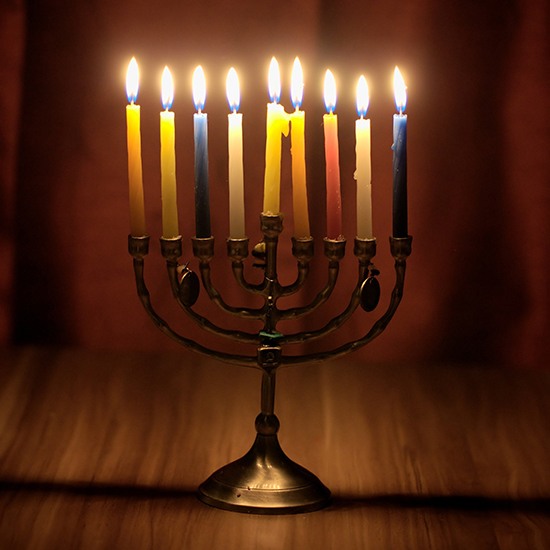
Each of the eight nights, a special nine-branched menorah, called a hanukkiah, is lit. One candle is added each night, culminating in eight candles on the final night. A ninth candle, the shamash, called the helper candle, is used to light the others.
Special blessings are recited each night before lighting the candles, often followed by traditional songs.
Foods cooked in oil are popular because they symbolise the miracle of the oil. Typical dishes include potato pancakes, called latkes, and jelly-filled doughnuts, called sufganiyot.
Playing with the dreidel, a four-sided spinning top, and exchanging small gifts or gelt are traditional practices in most communities.
In many cities around the world, community menorah lightings and cultural events take place throughout the holiday.
The holiday always begins on the 25th day of the Hebrew month of Kislev. Because the Hebrew calendar is lunar-solar, the corresponding dates on the Gregorian calendar vary each year, typically falling in late November or December.
In 2025, Hanukkah begins at sundown on Sunday, December 14, and continues through nightfall on Monday, December 22. The first candle is lit on the evening of December 14, and the eighth and final candle is lit on the evening of December 21, with the holiday concluding the next day.
During the traditional eight-night observance, families and communities gather to light the menorah, share meals, and reaffirm themes of light, hope, and freedom that define the festival.
Although Hanukkah began as a religious observance, it has gained broader cultural significance in many societies, especially as it aligns with the winter holiday season. The themes of light in darkness and resilience in the face of adversity resonate with diverse communities and generations.
#hanukkah #celebration #esoteric