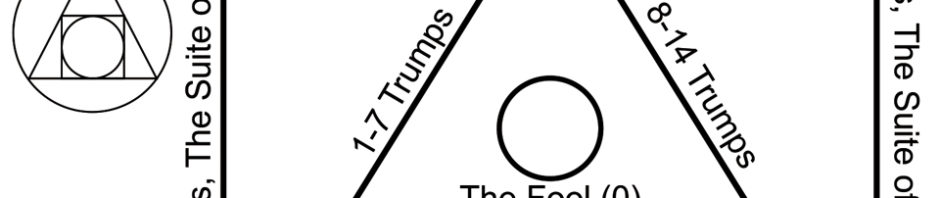
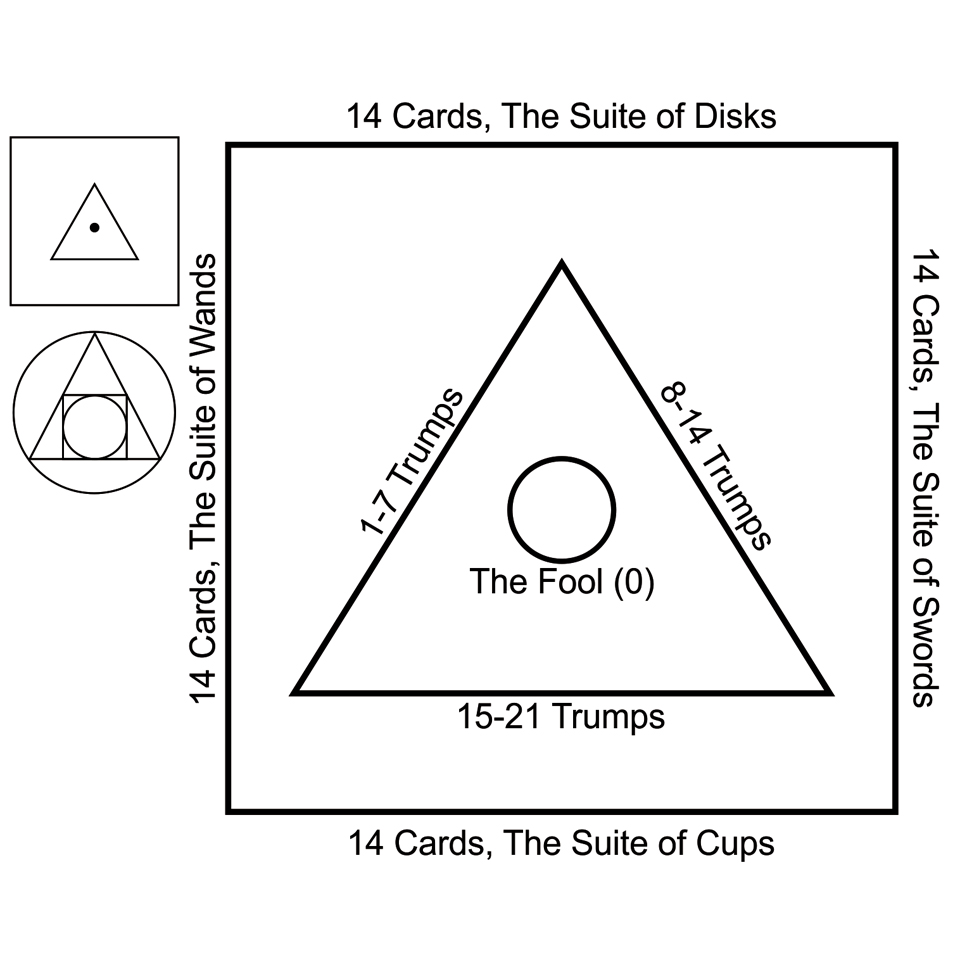
In 1913 P.D. Ouspensky wrote an essay about the Tarot deck entitled “The Symbolism of the Tarot.”
According to Ouspensky, the cards of the Tarot deck are divided into three parts. Read more The Symbolism of the Tarot
In 1913 P.D. Ouspensky wrote an essay about the Tarot deck entitled “The Symbolism of the Tarot.”
According to Ouspensky, the cards of the Tarot deck are divided into three parts. Read more The Symbolism of the Tarot
“Everything is just the same as it was thousands, and tens of thousands of years ago. The outward form changes. The essence does not change. Man remains just the same. ‘Civilized’ and ‘cultured’ people live with exactly the same interests as the most ignorant savages. Modem civilisation is based on violence and slavery and fine words. But all these fine words about ‘progress’ and ‘civilisation’ are merely words.” (Ouspensky, P.D.; In Search of the Miraculous; Chapter Two; page 28.)
“As my life passes, I may begin to suspect that I am not what I believe. I am a being who is asleep, a being with no consciousness of himself. Read more My prison
“In order to know the future it is necessary first to know the present in all its details, as well as to know the past. Today is what it is because yesterday was what it was.
And if today is like yesterday, tomorrow will be like today. If you want tomorrow to be different, you must make today different. If today is simply a consequence of yesterday, tomorrow will be a consequence of today in exactly the same way. And if one has studied thoroughly what happened yesterday, the day before yesterday, a week ago, a year, ten years ago, one can say unmistakably what will and what will not happen tomorrow.” (Gurdjieff)
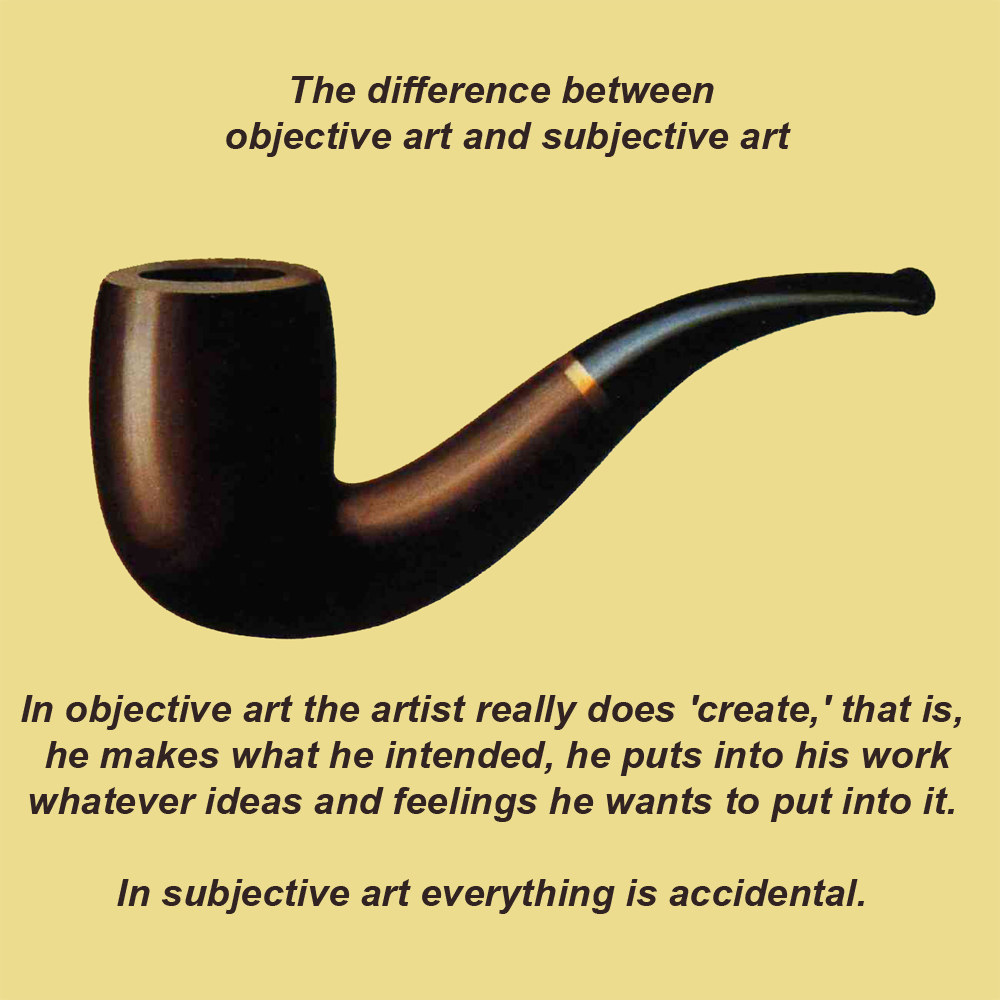
“The difference between objective art and subjective art is that in objective art the artist really does ‘create,’ that is, he makes what he intended, he puts into his work whatever ideas and feelings he wants to put into it. Read more The difference between objective art and subjective art
“Knowledge is one thing, understanding is another thing.
People often confuse these concepts and do not clearly grasp what is the difference between them.
Knowledge by itself does not give understanding. Nor is understanding increased by an increase of knowledge alone. Understanding depends upon the relation of knowledge to being. Understanding is the resultant of knowledge and being. And knowledge and being must not diverge too far, otherwise understanding will prove to be far removed from either. Read more Knowledge and Understanding
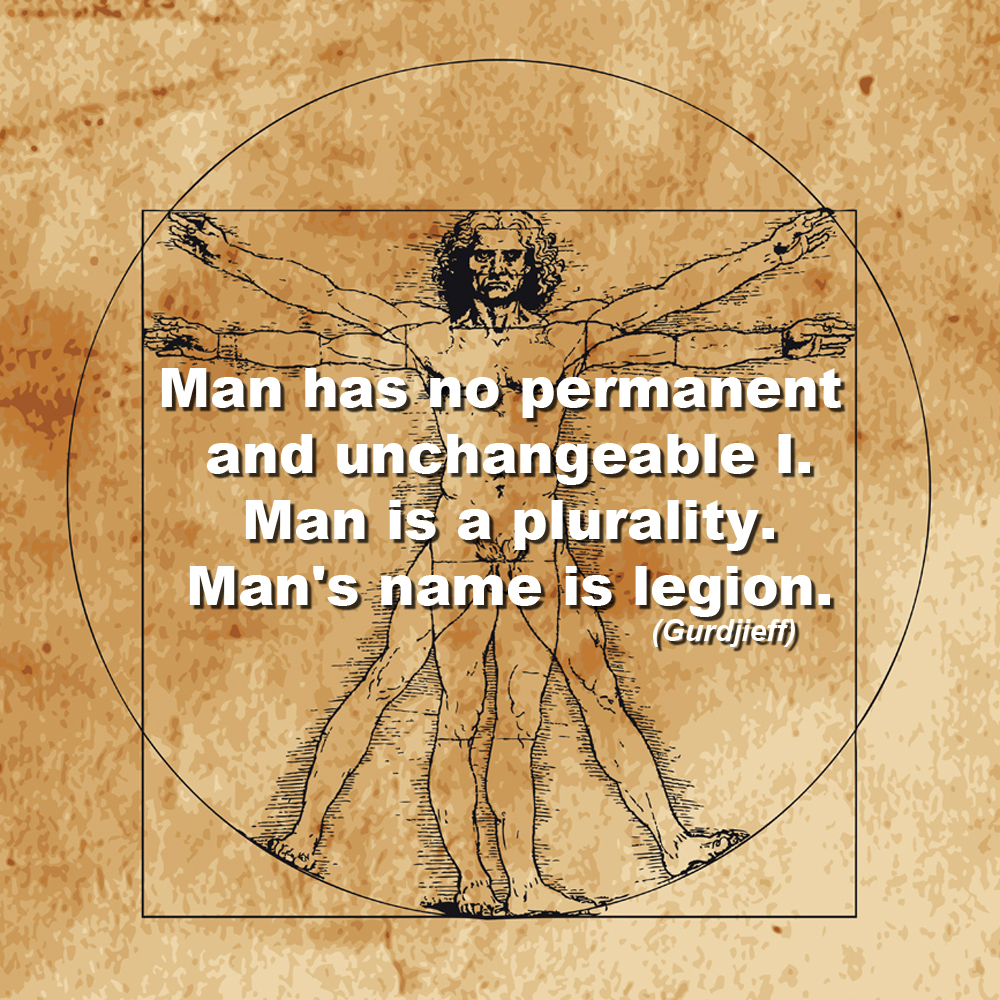
“Man such as we know him, the ‘man-machine,’ the man who cannot ‘do,’ and with whom and through whom everything ‘happens,’ cannot have a permanent and single I. His I changes as quickly as his thoughts, feelings, and moods, and he makes a profound mistake in considering himself always one and the same person; in reality he is always a different person, not the one he was a moment ago. Read more Man’s name is legion
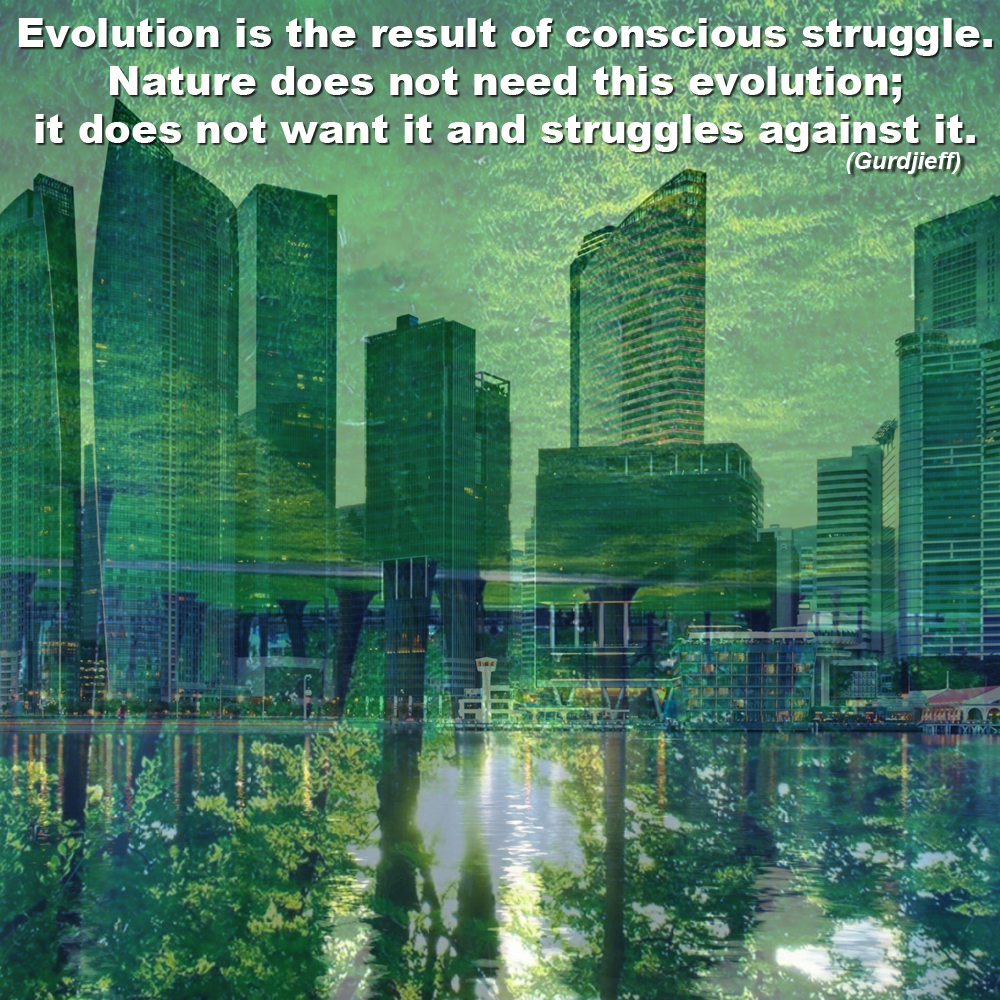
“Evolution is the result of conscious struggle. Nature does not need this evolution; it does not want it and struggles against it. Evolution can be necessary only to man himself when he realizes his position, realizes the possibility of changing this position, realizes that he has powers that he does not use, riches that he does not see. And, in the sense of gaining possession of these powers and riches, evolution is possible. But if all men, or most of them, realized this and desired to obtain what belongs to them by right of birth, evolution would again become impossible. What is possible for individual man is impossible for the masses.” (Gurdjieff)
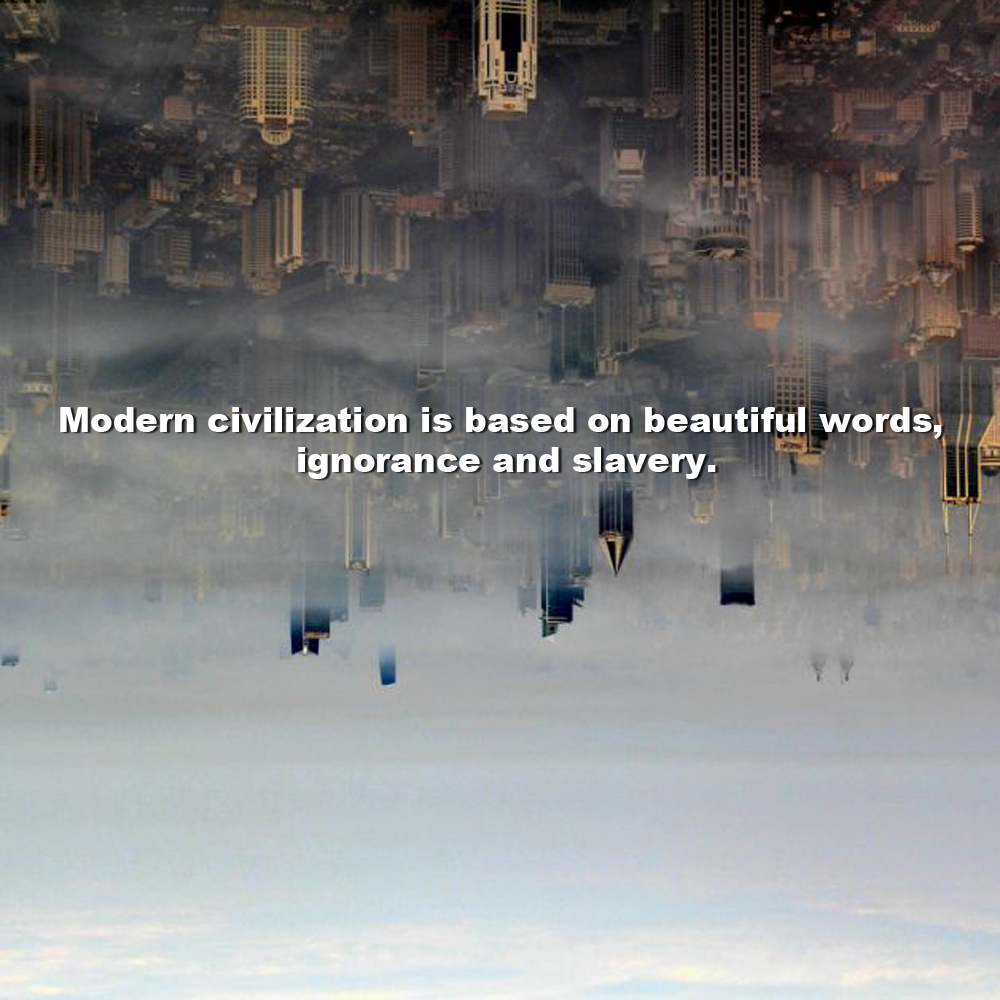
Modern civilization is based on beautiful words, ignorance and slavery.
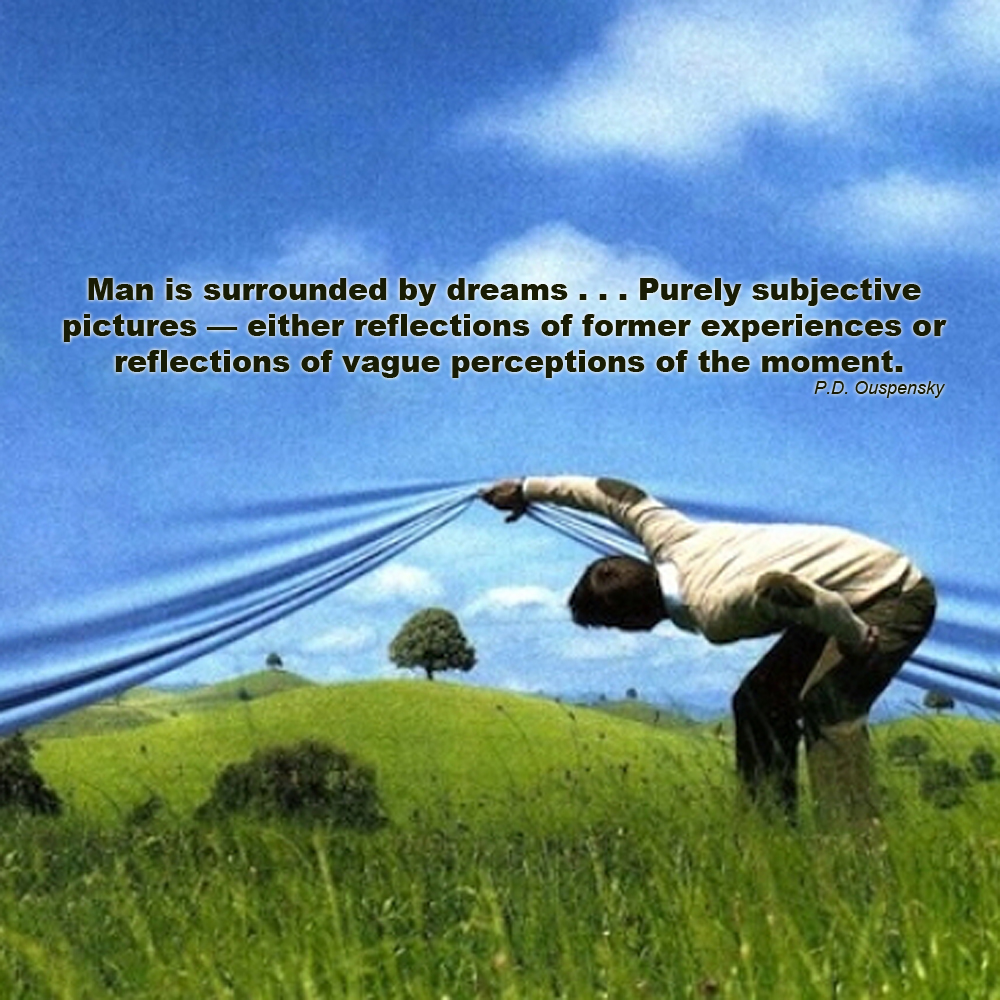
“Man is surrounded by dreams . . . Purely subjective pictures — either reflections of former experiences or reflections of vague perceptions of the moment.”
P.D. Ouspensky – Conscience The Search for Truth